



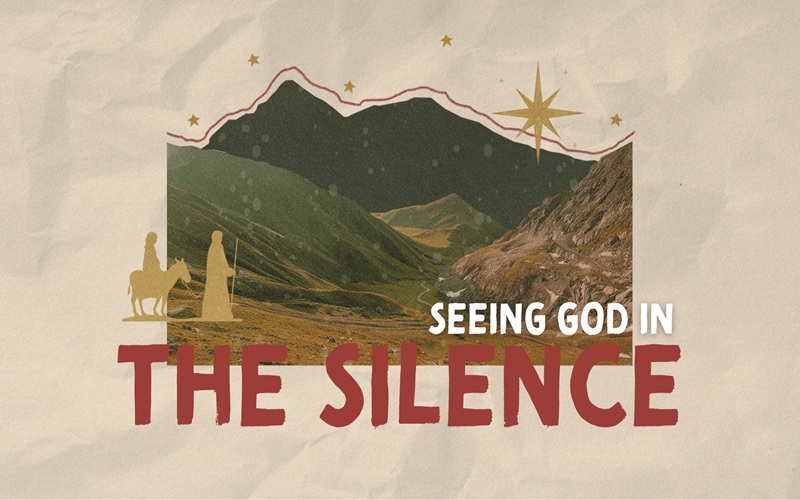
We often picture the first Christmas as a peaceful, serene night – complete with gentle snow, quiet animals, and a glowing manger. But the reality of that “silent night” was far from the romanticized version we see on Christmas cards. It was a story of hardship, uncertainty, and what appeared to be God’s absence in the midst of overwhelming circumstances.
The Real Story Behind the Silent Night
The journey to Bethlehem began with Caesar Augustus’s decree for a census – a taxation under foreign occupation that offered no exemptions for hardship. Joseph, a carpenter from Nazareth, received the summons to return to his ancestral hometown of Bethlehem, 90 miles away. Mary, nine months pregnant and carrying a child conceived by the Holy Spirit, had to make this treacherous journey.
A Journey of Hardship
Picture this: a heavily pregnant woman walking most of those 90 miles through the hill country of Judea. Historical evidence suggests Mary likely walked rather than rode a donkey, as donkeys were expensive for a working-class family. The journey took four to five days, covering 10-15 miles daily through cold nights, possible rain, and dangerous terrain.
Each night meant sleeping outdoors or in basic traveler shelters with stone or dirt floors. Mary, in her final weeks of pregnancy, had to rest on the ground knowing she faced another long day of walking. Meanwhile, Joseph watched his fiancée struggle, knowing they had no choice but to continue.
No Room at the Inn
After five grueling days, they finally reached Bethlehem – only to discover there was no room for them anywhere. The city was packed with descendants of David returning for the census. Every relative’s home was full, every public shelter overcrowded. Joseph couldn’t find a place for his pregnant wife to give birth.
They ended up in a stable, likely a cave used for sheltering animals. There, on a stone floor surrounded by animal smells and unsanitary conditions, Mary went into labor with no midwife, no family support, and no proper facilities. When Jesus was born, they wrapped Him in swaddling clothes and laid Him in a manger – a stone feeding trough for animals.
What Was God Thinking?
In that moment, it must have seemed like God was absent. The silence was deafening. No announcements, no royal processions, no heavenly fanfare – just a young mother in pain, an exhausted carpenter, and a newborn baby in a cave.
But here’s the profound truth: God wasn’t absent that night. God was arriving. Emmanuel – God with us – was being born. What looked like abandonment was actually arrival.
Silent Nights Are Not Lonely Nights
God’s Presence in the Darkness
When we face our own silent nights – those painful, overwhelming, lonely times when we wonder where God is – we need to remember that God’s silence doesn’t equal God’s absence. Matthew 1:23 reminds us that Jesus shall be called Emmanuel, meaning “God with us.”
Silence and darkness aren’t signs of God’s absence; they’re the canvas He uses to make His presence more visible. Just like stars are always there but only visible when it gets dark, we often don’t see the depth of God’s character and love until we’re in dark times.
The Open Door
That night in Bethlehem changed everything about our relationship with God. Before Christ, the door to God’s presence was controlled from His side. But that night, God changed the hinges, the doorknob, and the lock. Now the door is on our side. “Behold, I stand at the door and knock. If anyone will open, I will come in.”
We now live under an open heaven – open to God’s grace, mercy, faithfulness, forgiveness, and blessing. The closed heaven of the Old Testament became an open heaven where God is with us permanently and intimately.
Silent Nights Are Not Wasted Nights
Every Step Has Purpose
When the angels appeared to the shepherds, they announced that this night had purpose: “Born to you is a Savior, who is Christ the Lord.” Mary and Joseph weren’t in Bethlehem just to pay taxes – they were there so God could fulfill His promise. Seven hundred years earlier, the prophet Micah had declared that the Messiah would be born in Bethlehem.
Every step of that 90-mile journey had purpose. God orchestrated circumstances so that prophecy would be fulfilled without human manipulation. He used Caesar Augustus’s decree to move the whole world on behalf of His plan.
God’s Timing Is Perfect
The journey had to happen when Mary was nine months pregnant because the prophecy wasn’t that the child would grow up in Bethlehem, but that He would be born there. Galatians 4:4 tells us, “When the set time had fully come, God sent his son.”
Your lonely night is not your only night. God has worked, is working, and will continue to work in incredible ways. The birth of Jesus was the bookend of 400 years of silence – no angels, no prophets, no signs. Yet God was preparing for the greatest arrival in human history.
Silence Often Means Preparation
Throughout Scripture, we see this pattern: silence isn’t abandonment, it’s preparation. Moses spent 40 years in the desert learning leadership before leading Israel out of Egypt. Jesus spent 30 years in carpentry before three years of public ministry. Paul spent years in Arabia learning by revelation what he couldn’t learn from rabbis.
Your silent season isn’t dead time – it’s development time. It’s not dead ground, it’s germination.
Silent Nights Are Holy Nights
God Brings His Own Glory
When the angels appeared to the shepherds, they declared, “Glory to God in the highest!” God doesn’t need glorious settings to do His work – He brings His own glory with Him when He shows up.
Some of God’s greatest works have happened in the worst places and worst times. His glory is drawn to gloomy times, gloomy places, and even gloomy people. It’s not about where you are; it’s about where He is that makes a place holy.
You Can Be in God’s Will During Chaos
Here’s a crucial truth: you can have everything falling apart and still be in the center of God’s will for your life. Mary and Joseph had nothing going right, yet they were exactly where God wanted them to be.
What makes hurt holy, pain purposeful, and burdens bearable is His presence and purpose. Moses was told to remove his sandals because he was standing on holy ground – not in a palace, but on the backside of a desert while tending sheep.
Life Application
This Christmas season, instead of looking for God to break the silence, start looking to see Him in the silence. Remember that situations are temporary, but His presence is permanent. God will be with you long after your current situation has passed.
Where do you need to “take off your sandals” and recognize that you’re standing on holy ground? Sometimes it’s not about putting on shoes to go do something – it’s about taking them off, being still in the silence, and letting God be seen.
Questions for Reflection:
- What “silent night” are you currently experiencing in your life?
- How might God be preparing you through this season rather than abandoning you?
- Where do you need to recognize God’s presence in what feels like His absence?
- What would change if you truly believed that your current struggle has purpose in God’s plan?
<s